Okay, deep breaths. Everything is going to be okay. We promise.
If you’re like many other online retailers that specialize in sex toys and other adult products, you probably threw your hands in the air and let out a scream of frustration when Etsy announced its plans to pull the plug on just about everything adult-related.
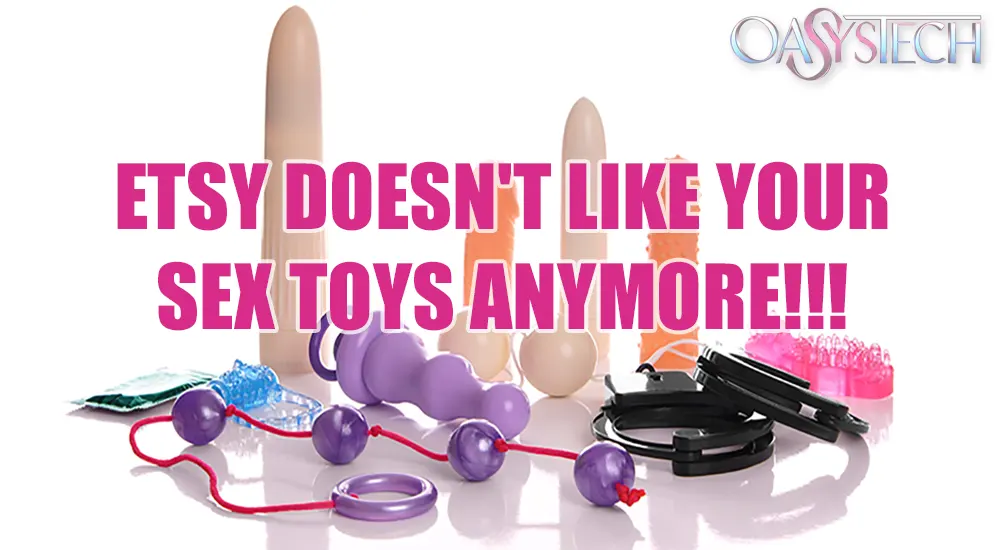
Etsy has been altering terms and tweaking requirements for years now, to the point just about every independent shop owner has learned to clench their butt cheeks before opening any announcement emails. What once was a wonderful sandbox of opportunities has become overly corporate, not to mention Etsy has dug its fingers deeper and deeper into the pockets of creators, taking away larger chunks of cash with every sale.
The official ban on nearly all sex toys went into effect at the end of July. The ban came about a month after it announced the change, which really didn’t give store owners much time to pivot. This alone is incredibly frustrating. While smaller shops are generally more nimble than larger corporations, it still takes time to find alternative platforms, look through cost analysis comparisons, shift money around into these other outlets, and to research what else is out there.
Really, it just goes to show how far removed the board of directors is from everyday Etsy sellers.
But okay, let’s get down to brass tax. What exactly did Etsy do and why exactly did they go about doing it?
Etsy decided to come after the “adult” market. While this does include any sex toys that can be inserted into the body, applied to genitals, or designed to be used in any way with genitals, it also covers imagery and photographs. The ban even covers sheer underwear using real photographs.
In the past, a cover image would be blurred out, and then after looking up the product, a non-blurry image could be made available. However, Etsy now is telling its sellers to use a mannequin, or for models to wear clothing under the underwear. Everyone in the universe who wears underwear knows clothing fits a person differently, and modeling it on a mannequin doesn’t help at all.
But it doesn’t matter. If you’re a sex shop or retail adult toys, you’re now likely banned from selling on Etsy.
So, why did Etsy do this?
There are a few reasons. First, when it comes to nudity or sex toys, Etsy has been relying on independent shop owners to verify the age of customers. Sure, if someone under-aged found a way to buy a toy Etsy would undoubtedly shift the blame to the shop owner (and revoke their ability to sell), but Etsy would receive blowback.
Second, you better believe people complained. There are always those people who see anything adult-related and will write in emails, letters, and tweets. There was almost certainly external pressure from individuals (who likely don’t even shop on Etsy) to remove the adult content.
Unfortunately, what’s done is done, and unless Etsy sees a massive dropoff in sales, it isn’t going back on the change. It is, effectively, turning its back on Etsy sellers. So whether you offer vintage adult videos or run a sex toy store, the platform has more-or-less banished you.
What can you do about it? Plenty.
What Can Etsy Sellers Do?
Sellers affected by this policy should take immediate action. Here are some steps to consider:
- Keep Your Etsy Open…But
- Build Your Own Website
- Market With Social Media
- Contact Your Email List
1. Keep Your Etsy Open…But
While Etsy has turned its back on some of the best online sex stores with this move, it doesn’t mean you should turn your back on Etsy. It is still a valuable search engine for showcasing products and reaching potential customers in search for items or shops.
It also offers social proof of your products, if you’ve sold a number in the past. What you want to do instead is retail non “sex toy” products on the platform. Maybe this is lubricants, or you make handcuffs or whips for BDSM. If you don’t, you should consider adding this to your retail lineup. Yes, you might have a diminished storefront on Etsy, but it keeps you open, and you can provide backlinks to your website. Make sure to explain you have more fantastic products “too sexy” for Etsy.
It’s not necessary to dive into the blame game on the platform. Save that for a blog post or for your website. Keep it short and sweet.
2. Build Your Own Website
If you don’t have your own website you need to build one ASAP. Yes, it can be difficult to generate organic traffic off of Google due to the hundreds (if not thousands) of other websites offering sex items. However, that doesn’t mean you should quit before you even start. There are a million books out there but that doesn’t stop people from writing them.
Plus, with a website, you can send traffic to it through various means, including your still-open Etsy account.
3. Market With Social Media
One of the best ways to send traffic to your new website is to market through social media. Have fun with it. The more you stand out on socials the more traffic you’ll receive. So while it’s difficult to stand out on Google, a fun personality will elevate your game on platforms like Instagram and TikTok.
Spend most of your time on these platforms. You’ll burn yourself out if you try to upload to every social platform out there. Stick to these and grow your audience.
4. Contact Your Email List
Download the email list you’ve generated from sales via Etsy. Email them, letting your customers know why you’ve opened your own website. Again, keep it short, and then offer a discount. You could offer them the same percentage discount Etsy was taking out of your pocket. This way, you’ll still earn the same amount while generating return sales.
Remember, if you need help building a new website from the ground up, with email marketing or with any kind of site management, OASysTech can help you out. The Etsy issue is a road bump, but one that, we believe, can actually generate new financial growth and income for small businesses.